When homeowners evaluate ways to boost their property value and elevate street-level aesthetics, they often focus on landscaping, fresh exterior paint, or upgraded front entry doors. However, the roof typically makes up forty to sixty percent of a home visible exterior profile. A worn, outdated, or mismatched roof drags down the visual appeal of an entire property, whereas a thoughtfully designed roof serves as an architectural anchor that unifies every exterior element.
Modern residential roofing design extends far beyond simply choosing a basic asphalt shingle. Today, homeowners can choose from a rich array of materials, dimensional profiles, color palettes, and architectural features that transform a shelter necessity into a striking design statement. Aligning your roof design with your home architectural style, surrounding landscape, and exterior color scheme elevates curb appeal while protecting your long-term equity.
Aligning Roof Materials with Architectural Styles
A crucial rule of thumb in roofing design is selecting materials that complement the original architectural language of your house. A material that looks breathtaking on a Mediterranean villa will feel out of place on a traditional New England Cape Cod.
Architectural Asphalt Shingles for Versatile Elegance
Standard three-tab asphalt shingles flat, uniform look often lacks visual character. Upgrading to architectural or dimensional asphalt shingles brings immediate depth and texture.
-
Dimensional Layering: Architectural shingles feature multiple layers of asphalt laminated together, mimicking the rich shadow lines of natural wood shakes or slate tiles.
-
Design Versatility: These shingles pair exceptionally well with Craftsman bungalows, Colonial Revival homes, traditional suburban builds, and Ranch-style houses.
-
Cost-Effective Luxury: They offer high visual impact and high wind ratings at a fraction of the cost of heavy natural materials.
Standing Seam Metal for Sleek Modernism
Standing seam metal roofing has experienced a massive resurgence in modern, contemporary, and modern farmhouse architecture.
-
Clean Vertical Lines: The raised interlocking seams create strong vertical lines that make structures look taller, leaner, and more grounded.
-
Industrial and Farmhouse Aesthetics: Matte black, charcoal gray, or bronze standing seam metal roofs provide sharp contrast against crisp white board-and-batten siding or natural stone facades.
-
Unmatched Longevity: Metal roofs resist fire, wind, and rot, offering lifespans exceeding fifty years with minimal visual weathering.
Synthetic and Natural Slate for Historic Grandeur
Slate has long been recognized as the pinnacle of luxury roofing materials, favored for its organic texture and timeless charm.
-
Historical Accuracy: Ideal for Victorian, Tudor, French Country, and Georgian estates where historical weight is paramount.
-
Synthetic Alternatives: Authentic slate is extremely heavy and often requires structural reinforcement. Modern composite or synthetic slate shingles made from engineered polymers capture the authentic chiseled edges and rich color variation of natural stone at a light weight.
Clay and Concrete Tile for Warm Southwestern Charm
S-shaped barrel tiles and flat concrete tiles introduce rich texture and old-world character.
-
Architectural Pairing: Essential for Spanish Colonial, Mediterranean, Tuscan, and Southwestern Adobe homes.
-
Earthy Color Variations: Terracotta, warm ochre, sand, and deep terracotta shades reflect sunlight beautifully, bringing warm, inviting tones to bright climates.
The Strategic Use of Color and Shadow Lines
The color of your roof does not exist in isolation. It must interact harmoniously with your siding, window trim, stone accents, and natural surrounding environment.
Creating Contrast Versus Harmonious Blending
-
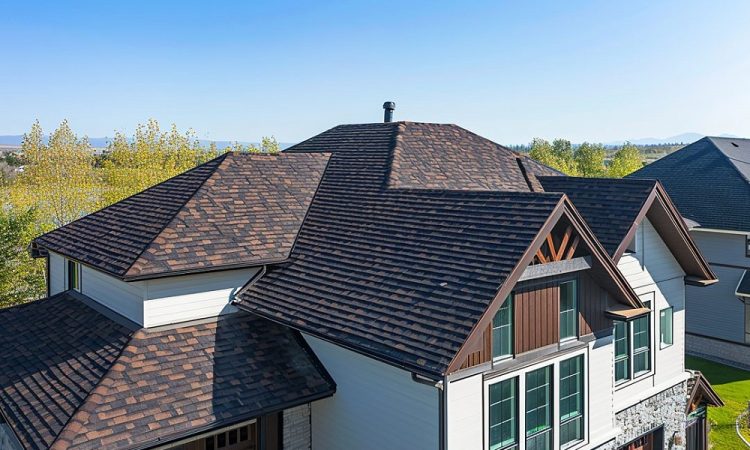
High Contrast: A dark roof paired with light siding creates a crisp, dramatic look. A charcoal or black roof on a white or light gray house anchors the structure visually, drawing immediate attention to architectural peaks.
-
Low Contrast / Tonal Harmony: Choosing a warm brown, soft slate, or weathered wood shingle for a beige, tan, or brick home creates a gentle, serene transition that feels organic and unified.
Utilizing Shadow Lines and Texture
Flat roofs absorb light, making a house look monolithic and plain. High-profile materials create deep shadow lines that change throughout the day as sunlight shifts across the roof plane.
-
Staggered Patterns: Using shingles or tiles with irregular, hand-cut edges gives the roof a handcrafted, artisanal look.
-
Multi-Tone Blending: Modern shingles feature multi-tonal color blends, combining dark brown, slate, and charcoal granules into a single shingle to give flat roofs dynamic visual texture.
Architectural Roof Accents That Elevate Design
In addition to primary roofing materials, incorporating structural design elements into your roofline transforms standard roof shapes into custom architectural showpieces.
Mixed-Material Roof Designs
You do not have to use a single material across your entire roof. Combining two distinct materials adds tailored sophistication.
-
Metal Accent Overhangs: Pair a primary architectural asphalt roof with a standing seam copper or black metal roof over front porches, bay windows, or dormers.
-
Portico Highlights: Using a warm copper roof over a small front entry porch introduces a metallic accent that ages into a rich patina over time.
Dormers and Cupolas
Breaking up massive, monotonous roof planes creates visual curiosity and adds useful interior space.
-
Gable and Eyebrow Dormers: Adding dormers introduces vertical peaks, breaks up expansive rooflines, and brings natural light into upper stories.
-
Decorative Cupolas and Weather Vanes: Placing a wooden or copper cupola atop a garage or primary ridge line serves as a charming focal point on traditional, rural, or farmhouse architecture.
Upgraded Ridge Caps and Eaves
The finishing touches along roof edges define the clean lines of your installation.
-
High-Profile Ridge Caps: Specialized, extra-thick ridge cap shingles emphasize the peaks of your roof, giving it a sturdy, custom-finished look.
-
Exposed Rafter Tails and Decorative Brackets: Underneath the eaves, adding decorative timber brackets or leaving rafter tails exposed adds craftsman-style artistry to gable ends.
Popular Architectural Styles and Matching Roof Concepts
| Architectural Style | Ideal Roof Material | Recommended Color Palette | Key Design Accent |
| Modern Farmhouse | Standing Seam Metal | Matte Black, Dark Bronze | Metal porch overhangs |
| Craftsman Bungalow | Heavy Architectural Shingle | Weathered Wood, Bark Brown | Decorative timber brackets |
| Spanish Colonial | Clay Barrel Tile | Terracotta, Antique Red | Exposed rafter tails |
| French Country | Composite Slate | Slate Gray, Muted Green | Eyebrow dormers |
| Traditional Colonial | Dimensional Asphalt | Charcoal, Estate Gray | High-profile ridge caps |
Practical Considerations: Balancing Aesthetics and Function
Enhancing curb appeal must go hand-in-hand with structural performance and local climate needs.
Climate and Solar Reflectivity
In hot, sun-drenched regions, dark roofs absorb massive amounts of heat, driving up cooling costs. Cool roof technology uses solar-reflective granules on dark shingles or lighter metal finishes to reflect heat away while maintaining rich, attractive colors.
Neighborhood Harmony and HOA Guidelines
A roof design should stand out for its elegance, not because it clashes violently with adjacent properties. Check homeowner association guidelines for approved material types, allowable color palettes, and minimum pitch requirements before finalizing your design.
Frequently Asked Questions
What roof color is best for increasing resale value?
Neutral dark tones like charcoal gray, slate gray, and weathered wood brown offer the broadest resale appeal. These colors pair effortlessly with almost any siding shade or architectural style, giving future buyers confidence that their exterior paint choices will look balanced.
How does roof pitch affect curb appeal and material selection?
Roof pitch, or steepness, dictates how much of the roof surface is visible from the street. Steeply pitched roofs show significant surface area, making texture, shadow lines, and material choice paramount to curb appeal. Low-slope or flat roofs reveal very little surface, shifting the visual focus to fascias, eaves, and metal edge trims.
Can I change my roof color without replacing the entire roof structure?
While roof coatings exist for commercial flat roofs, standard residential shingles and tiles cannot be painted or stained effectively to change their color. Changing your roof color requires installing a complete new layer of roofing materials down to the underlayment.
Are metal roofs too loud during heavy rainfall?
No. When properly installed over solid wood roof sheathing and high-grade acoustic underlayment, residential standing seam metal roofs are no louder during rainstorms than traditional asphalt shingle roofs. The solid roof deck absorbs sound vibrations completely.
What is the difference between standard shingles and architectural shingles?
Standard three-tab shingles are flat, thin, and laid in a uniform single-layer grid. Architectural shingles feature two or more layers of laminated asphalt cut into varied shapes, creating a three-dimensional, textured look that mimics wood or stone and offers far superior durability against wind uplift.
How do dark roofs impact home energy efficiency compared to light roofs?
Dark roofs naturally absorb more solar heat, which can increase attic temperatures during summer months if the roof lacks adequate ventilation. However, modern roofing manufacturers utilize special infrared-reflective granules in dark shingles to minimize heat absorption without sacrificing dark, dramatic aesthetics.
Is synthetic slate as durable as authentic natural slate?
Yes, high-end synthetic slate made from virgin polymers and rubber alloys offers exceptional impact resistance, high fire ratings, and fifty-year warranties. Unlike natural slate, synthetic slate will not crack, chip, or delaminate under hail impact or freeze-thaw cycles, and it requires no structural roof reinforcement.