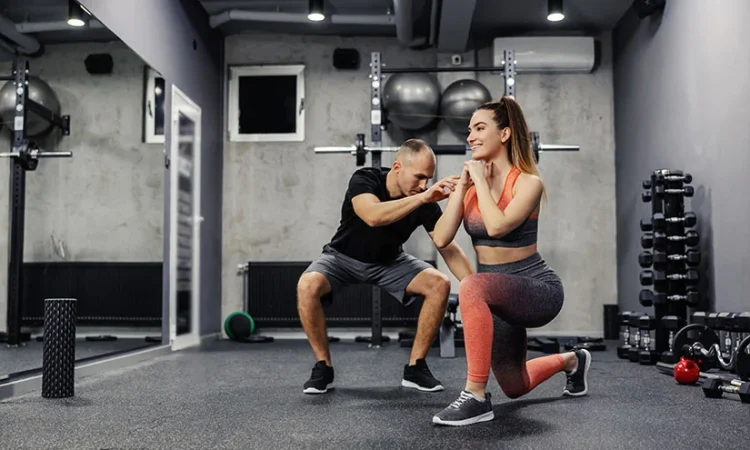
A missed gym visit does not need to become a missed training week. A resourceful personal gym trainer singapore clients work with can convert the purpose of a full gym session into a compact home workout suitable for an HDB flat, without pretending that every machine or heavy lift can be perfectly replicated.
The objective is not to copy each exercise. It is to preserve the most important training patterns and an appropriate level of effort while respecting noise, floor space, equipment and household constraints.
Start With the Purpose of the Session
A gym programme may include eight exercises, but they do not all carry equal importance. The trainer should identify what the session is intended to accomplish.
A lower-body session might prioritise knee-dominant strength, hip extension and trunk control. An upper-body session may focus on pressing, pulling and shoulder stability.
Once these goals are clear, home alternatives can be selected according to function. This produces a more useful backup than replacing every exercise with an arbitrary bodyweight movement.
Accept What Cannot Be Replicated
A heavy barbell deadlift cannot be reproduced exactly with a light resistance band. A lat pulldown may also be difficult to replace without a secure anchor.
Good home programming acknowledges these limits. The trainer may preserve movement practice and muscular effort while scheduling the heavier stimulus for the next gym visit.
A backup session supports continuity. It does not need to provide an identical physiological challenge to be worthwhile.
Manage Noise as a Programming Variable
Jumping, dropping weights and fast footwork can disturb neighbours, particularly in older flats or during early and late hours.
Low-noise training can still be demanding. Split squats, push-ups, controlled step patterns, isometric holds and slow-tempo exercises create substantial muscular effort without repeated impact.
The trainer should avoid assuming that intensity requires noise. Longer pauses, increased range, unilateral variations and reduced rest can all raise difficulty quietly.
Use Tempo to Compensate for Limited Load
When heavy equipment is unavailable, repetition speed becomes valuable. A slower lowering phase increases time under tension and reduces the contribution of momentum.
For example, a client may take three or four seconds to lower into a split squat, pause briefly and then stand under control. Push-ups can be progressed in the same way.
Tempo should remain measurable. Instructions such as “go slowly” are less useful than a clear count the client can repeat.
Unilateral Exercises Make Light Loads More Useful
Training one side at a time increases the relative demand without requiring large weights. Split squats, single-leg hinges and one-arm presses can therefore suit small home spaces.
These exercises also reduce the need to carry or store heavy equipment. A backpack, resistance band or adjustable dumbbell may be enough for selected movements.
Balance should not become the only challenge. If the client cannot load the intended muscles because of instability, light support from a wall or chair can improve the exercise.
Plan Safe Pulling Alternatives
Pulling movements are often the hardest to reproduce at home. Improvised door anchors and unstable furniture can fail.
The trainer should use only secure equipment according to its intended instructions. If no safe anchor is available, the backup plan may include band pull-aparts, prone arm movements, loaded backpack rows from a supported position or additional pulling volume during the next gym session.
Safety takes priority over creating a perfect exercise match.
Keep Space Requirements Realistic
A plan described as suitable for home may still require several metres of open floor. That is not practical in every bedroom or living room.
The trainer should know how much usable space the client has and whether furniture can be moved safely. Most exercises should fit within approximately the area of an exercise mat.
Movements with large lateral travel, uncontrolled kicks or long walking paths can be replaced with stationary variations.
Consider Other People in the Home
The best backup session fits household routines. A client may share the room with children, older family members or someone working remotely.
Equipment should not create trip hazards, and movements should not require swinging objects near furniture or other people. The plan may also need different versions for daytime and late-evening use.
These details determine whether the client will actually perform the workout. A theoretically effective plan has little value if it is socially or practically disruptive.
Preserve the Training Dose
Home workouts are often made difficult by adding very high repetitions. This can create discomfort and boredom without matching the goal of the original strength session.
The trainer can instead manipulate several variables:
- Use controlled tempo and pauses.
- Select unilateral variations.
- Work within a challenging but technically stable repetition range.
- Shorten rest modestly when appropriate.
The session should still have a defined number of working sets and a clear endpoint. It should not become an endless circuit simply because the equipment is lighter.
Create More Than One Backup Version
Not every disruption leaves the same amount of time. A client may need a 40-minute replacement on one day and a 15-minute minimum session on another.
A practical system can include a full home version and a short priority version. The shorter plan keeps the most important two or three movement patterns.
This prevents all-or-nothing decisions. When time is limited, the client already knows what to perform instead of abandoning the session.
Track Home Work in the Main Programme
A home session should not disappear from the training record. It contributes fatigue and may affect the next gym workout.
The client can record repetitions, resistance, tempo and perceived effort. The trainer can then decide whether the next gym session should continue as planned or be adjusted.
This is particularly important when the home workout includes high volumes of split squats, push-ups or other exercises capable of producing significant soreness.
Use the Gym for What the Home Cannot Provide
A well-designed backup plan does not reduce the value of gym training. It clarifies it.
Facilities such as True Fitness Singapore provide heavier loading options, cable systems, cardio equipment and an environment designed for progressive exercise. Home sessions provide flexibility when travel time, weather, family responsibilities or scheduling prevent attendance.
The two settings serve different purposes and can support the same programme.
A Backup Plan Should Be Ready Before It Is Needed
Creating a home session after a difficult workday introduces another decision. The client may not know which exercises to choose, how much to do or whether the replacement still supports the programme.
The trainer should prepare the backup in advance and practise any unfamiliar movements during a supervised session. That gives the client clear technique references and a reliable structure.
An effective HDB-friendly plan is quiet, compact, safe and connected to the main training goal. It keeps an interrupted schedule from becoming an abandoned routine while reserving gym-based loading for the sessions where it adds the most value.