When choosing the perfect roofing solution for your building, you have a number of options to choose from. Thermoplastic polyolefin (TPO) and elastomeric membranes are two commonly used roof coverings, offering excellent durability, energy efficiency, and other benefits. If you are trying to find the right roofing membrane between these two, this guide is for you.
Understanding TPO & Elastomeric Roofing Membranes
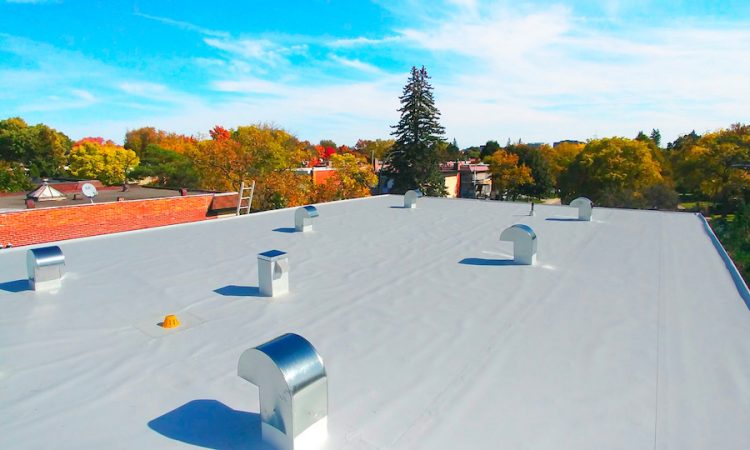
TPO and elastomeric roof membranes are different in terms of their composition. While the former is single-layered, the latter membrane is multi-layered. TPO membranes are most commonly used for flat roofs and are popular for their simple installation, lightweight characteristics, and cost-effective properties.
Advantages of TPO Roofing Membranes
There are many advantages to installing TPO roofing on your building. The most notable ones are as follows:
- Energy-Efficient: TPO has a white surface and can reflect up to 80% of sun’s rays. This translates into lower indoor temperatures in summer, thus reducing your building’s cooling costs.
- Waterproof Barrier: As the seams are heat-welded, a single, continuous waterproof layer is created across the building.
- Durability: TPO has a reinforced mesh layer that provides excellent resistance to punctures.
- Longevity: These roofing membranes can last for 20 to 30 years when properly installed and maintained. They are quite resistant to ultraviolet rays and chemicals.
- Shrinkage Resistance: TPO roofs are stable and do not shrink. This helps in retaining the integrity of the seams.
TPO membranes create highly cost-effective roofing systems. Both installation and roof repairs are straightforward and highly efficient. The initial cost of installation is relatively low.
Advantages of Elastomeric Roofing Membranes
Some of the key advantages of choosing elastomeric roofing membranes are as follows:
- Durability: These membranes can provide up to 35 years of service life. They can withstand wide-ranging temperature changes.
- Cold Flexibility: Elastomeric roof membranes are more suited for colder conditions. They remain elastic in conditions down to -40°C.
- Built-in Redundancy: The system features two bonded layers comprising a cap sheet and base sheet. Even if the cap sheet is damaged in any way, the base sheet will continue providing protection.
Despite these advantages, it is important to know that TPO is a more environmentally friendly roofing system. It is fully recyclable. Elastomeric membrane is not as eco-friendly and can produce non-recyclable materials.
Making the Right Choice of Roofing Membrane
The choice of TPO comes with the benefit of faster installation and lower costs. This makes it better suited for large commercial or industrial buildings. If you have a budget-based project at hand, consider TPO roofing membrane. Besides, it is recommended for flat roof surfaces.
On the other hand, elastomeric roof membrane is suited for flat and low-slope roofs over residential, commercial, and industrial buildings. It can withstand heavy rainfall and snow, and extreme freeze-thaw cycles, making it better for harsh conditions. Elastomeric roof systems are more commonly found in plexes, multi-family homes, and bungalows.
Choosing the Right Roofing Contractor
When making a choice between elastomeric and TPO membrane, it is recommended to choose a contractor that specializes in both products. This can help you select a product based on your needs, situation, and budget. Contractors, such as Toiture Vincent, can assess your roof and provide an honest recommendation.
Thus, it is easy to make the right choice between TPO and elastomeric roofing membranes. If you experience conditions involving heavy snow loads, temperatures reaching -40°C, and freeze-thaw cycles, the two-ply elastomeric membrane is the right choice. TPO, on the other hand, is more popular for large commercial and industrial surfaces that require reflective properties. Your contractor should help you make the right decision based on your roof size, long-term goals, and budget.